
Let's Start Our First Fridays/Saturdays Now -- And How They Fit Our Spiritual Lives
Sponsored

Catholic365 is sponsored by
Road to Purity


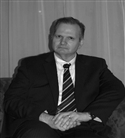

“The fact that the whole Euro-Atlantic world is evolving in the direction of denying the existence of sin is telling. It is, at the same time, the deepest current of secularization.”
That is how the Polish theologian Czeslaw Bartnik in his masterful compendium, Dogmatyka katolicka [Catholic Dogmatics] masterfully summarized the central thrust of modern secularism: the denial of sin. It is relativized into “your evil, my good.” It is removed as “guilt” and “psychological obsession” or “immaturity.” It is blamed on impersonal “social structures.” It is often paired with vaunted claims of human "autonomy," as if human choice constitutes rather than merely chooses "good" or "evil."
These secular dodges find unusual resonance in ecclesiastical sources, where “accompaniment” in practice often means saying nice things while leaving out the hard ones, calling for “inclusion” while muttering about conversion, and being “open” to all (“tutti, tutti, tutti!”) while downplaying that the open door policy does come with a price of admission.
The one thing not done, by society and increasing some Church circles, is accepting personal responsibility for sin.
Yet Catholic truth is that “all men are sinners and fall short of the glory of God” (Romans 3:23). That being the central truth of Christian anthropology – its understanding of who is man? – the Christian message cannot downplay sin without being unfaithful to itself and to the human person to whom that message is directed.
I would argue that one consequence of this loss of a sense of sin is, paradoxically, an exaggeration of the importance of politics. If sin loses its eschatological sense – its place in how we stand eternally before the eternal God – it generally does not go away. It can’t, because man is hardwired for the truth, even if he does his best to deny it. No, sin comes back – as I would argue it does in modern Western societies – as a perverted form of moralizing politics.
Take today, for example. Were it not a Sunday, December 28 would be the feast of the Holy Innocents, a day we commemorate when the state claimed authority over human life and committed murder. That is the central theme of this day, one not without application to our own. Yet I fully expect today to be hijacked for political purposes, used as arguments against ICE immigration enforcement. I’d argue that is the subordination of much more profound and important truths to temporal political causes.
Politics is important, and the Kingdom of God must be extended into the human realm. But politics is not and never will be salvific. Man will always live, until the Last Day, under regimes that are more or less morally imperfect because those regimes are human constructs and people are sinners. So, while focus on politics is important, an overemphasis on politics is not, I’d argue, as much “bringing God into human affairs” as it is a surrogate venue for doing the work of moral conversion that should be happening within us and in the Church.
A telling sign was the interview of Cardinal Matteo Zuppi, president of the Italian Catholic Bishops’ Conference. In a recent Christmastime interview (here and here) with a secular newspaper, never once does the name “Jesus” appear in his discourse.
Stop for a moment and think about that: how have we come to the moment that the head of a national bishops’ conference can speak at Christmastime about the Church’s concerns about the state of public life and never once say “Jesus?”
Zuppi, of course, is known for considering secularism a strangely positive thing. But the studied silence about explicit Christianity is not unique to the Cardinal from Bologna. There are Vatican documents from the Francis pontificate which likewise omitted or were chary with talking about “Jesus,” “Christ,” or “God” but are replete with policy prescriptions.
Is it fair to ask whether this secularism is not the “benefit” Zuppi sometimes appears to think it is but rather indicative of the dilution of the Christian message in the name of accompanying the Zeitgeist? And, pace those who think this is what Vatican II called for, is it not also legitimate to ask whether this putting the explicit Christian call to conversion from sin under a bushel basket a betrayal of that Council – and what came before it? Saying this aloud is not “divisive” or “unpastoral” – failing to say it is.
John Grondelski (PhD Fordham) was former associate dean of the School of Theology, Seton Hall University in New Jersey. He is a Catholic theologian with special interests in moral theology and the thought of St. John Paul II. All views are his own.



